
The Tax Bill Nobody Tells You About
After 25 years and over 1,700 homes sold across Ohio, I can tell you this: most sellers obsess over the wrong tax.
They panic about capital gains. They Google IRS Section 121. They call three CPAs before they call me.
Meanwhile, they’re bleeding $500 a month on an empty house they inherited. They’re stressing about a furnace that’s about to die. And when they finally do list it, they hand 6% to a realtor and another 2-3% to closing costs before they ever see a dime.
That’s the real tax. The “market tax” of selling the traditional way.
I’m not here to tell you capital gains don’t matter. They do. But after doing this since 1999, I’ve learned something most accountants won’t say out loud: the cost of preparing a house for market often exceeds the tax bill itself.
Let me show you the math I run with sellers every single day.

Do You Pay Capital Gains Tax When Selling a House in Ohio?
Short answer: Maybe.
Capital Gains Tax hits the profit you make, not the sale price. Here’s what I tell every seller who asks:
The Good News: If you lived in the home for 2 of the last 5 years, IRS Section 121 lets you keep up to $250,000 (single) or $500,000 (married) tax-free. That’s federal law, and it’s a gift.
The Bad News: If you’re selling a rental, an inherited house in Ohio, or a second home, you’re likely paying taxes on the gain.
Tax Traps I See Every Week
- Depreciation Recapture: Rented the house? The IRS wants back every tax break you took over the years. That’s taxed at 25%, and it’s non-negotiable.
- Short-Term Gains: Owned it less than a year? You’re taxed at your ordinary income rate—could be 22%, 24%, even 32% depending on your bracket.
- No Primary Residence Exclusion: Didn’t live there 2 of the last 5 years? You’re paying on the full gain.
I’m not a CPA. But I’ve sat across the kitchen table from enough sellers to know when the tax tail is wagging the dog.
The Hidden “Market Tax” Nobody Warns You About
Here’s what kills me. Sellers will spend three weeks agonizing over a potential $8,000 capital gains bill—then turn around and pay $18,000 in realtor commissions without blinking.
Let’s say you’re selling a house in Dayton for $200,000. Here’s what the “traditional way” actually costs you:
| Expense | Hard Way (Traditional Listing) | EZ Sell Way (Cash Offer) |
|---|---|---|
| Realtor Commission | $12,000 (6%) | $0 |
| Closing Costs | $4,000–$6,000 (2–3%) | $0 |
| Repairs to Pass Inspection | $8,000–$25,000 | $0 (we buy as-is) |
| Holding Costs (3–6 months) | $3,000–$6,000 (taxes, utilities, insurance) | $0 (close in 7–14 days) |
| Time to Close | 90–180 days | 7–14 days |
| Stress Level | Constant showings, negotiations, contractor delays | One call, one offer, one closing |
| Capital Gains Tax | Taxed on full retail price | Lower sale price = lower taxable gain |
Bottom line: On a $200,000 sale, the “Hard Way” costs you $27,000–$49,000 before you even consider capital gains. The cash offer? You keep what we agree on. No surprises.
Real Story: The Columbus Inheritance That Almost Broke Sarah
A few years back, I got a call from a woman named Sarah. She’d inherited her parents’ home in Columbus—nice ranch, decent neighborhood, but it hadn’t been updated since 1987.
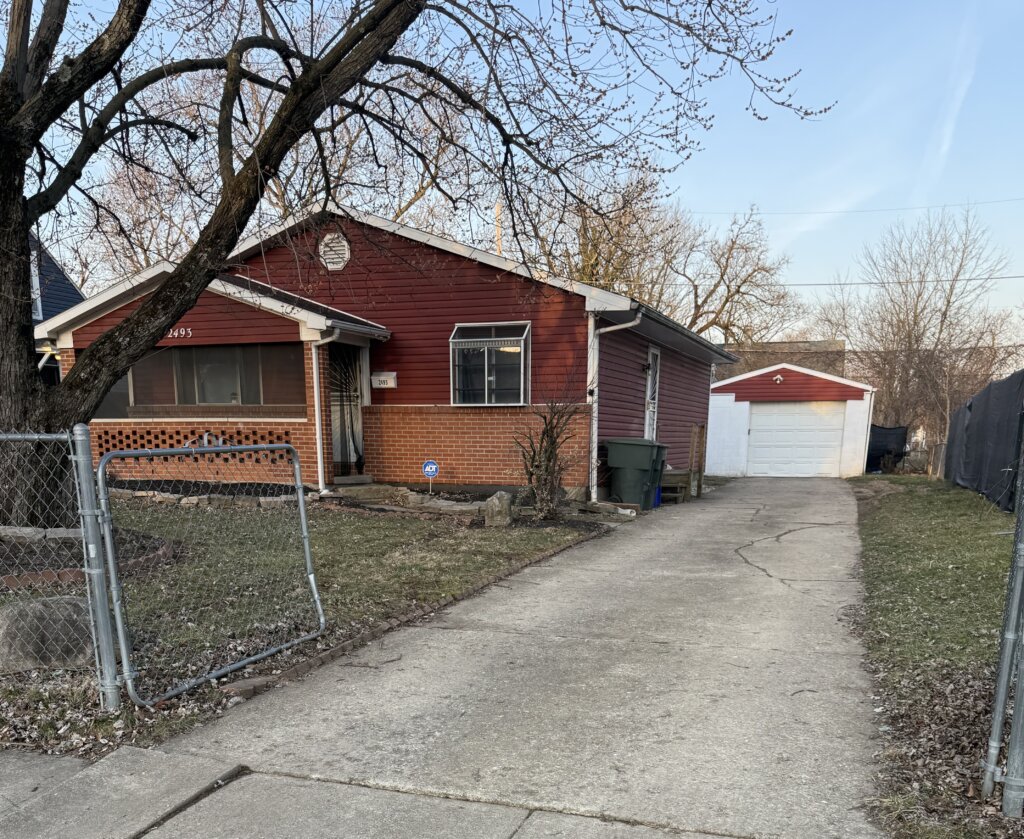
She didn’t live there. Hadn’t for years. So no primary residence exclusion. She was terrified that if she sold it for top dollar, the capital gains tax would eat half her inheritance.
She spent $15,000 trying to “fix it up” before she called me. New carpet. Fresh paint. She even replaced the kitchen countertops.
When I sat down with her, I showed her the real math:
- Her $15,000 in repairs increased her basis, sure—but it also increased her stress, her timeline, and her risk.
- Even after repairs, the realtor was going to take $12,000 in commission.
- Closing costs would be another $5,000.
- She’d be holding the property for at least 90 more days, paying taxes and utilities.
I made her a fair cash offer. She walked away without doing another lick of work. She saved on the 6% commission, the closing costs, and the holding costs. When we ran the final numbers, she actually netted more cash than if she’d listed it—even after the “lower” sale price.
“Mike made the tax nightmare go away. I didn’t have to deal with contractors, showings, or a 20-page tax form. He handled the house and I got my check in 8 days.”
— Sarah, Columbus OH
That’s what I mean when I say the “Hard Way” isn’t always the smart way.
3 Ways to Cut Your Capital Gains Tax (If You Decide to Pay It)
Look, I’m not anti-tax strategy. If you’re going to owe capital gains, you should do it smart. Here are the three moves I see my clients use most:
1. The “2-in-5” Rule (Primary Residence Exclusion)
Live in the house for 24 months out of the last 5 years, and the IRS lets you keep $250,000 (single) or $500,000 (married) tax-free under Section 121. That’s the golden ticket.
If you’re close to qualifying, it might be worth waiting. If you’re nowhere near it, don’t waste time.
2. The 1031 Exchange (For Investors)
Selling a rental property? You can defer 100% of your capital gains by rolling the proceeds into a new investment property under IRC Section 1031.
The catch: You’ve got 45 days to identify a replacement property and 180 days to close. Miss the deadline by one day, and you’re paying the full tax.
That’s where selling to a cash buyer like me helps. We close fast—sometimes in 7 days—so you don’t miss your exchange window.
3. Offset Gains with Capital Improvements
Put on a new roof in 2020? Finish the basement? Replace the HVAC? Those costs increase your “basis” and lower your taxable profit.
Just keep your receipts. The IRS wants proof, and your memory doesn’t count.
Time vs. Money: The Calculation Most Sellers Miss
Every month you hold a property, you’re paying:
- Property taxes
- Homeowner’s insurance
- Utilities (even if it’s empty)
- Lawn care, snow removal, basic maintenance
In Dayton, that’s easily $500–$800 a month. In Columbus or Cincinnati, more like $800–$1,200.
If it takes you 4 months to list, repair, and close the traditional way, you’ve spent $2,000–$4,800 just keeping the lights on.
Meanwhile, I can close in a week. You stop the bleeding immediately.
So yeah, my cash offer might be lower than retail. But when you subtract commissions, repairs, closing costs, and months of holding expenses, my clients usually walk away with more money in their pocket—and they do it faster, with zero stress.
The Hard Way vs. The EZ Sell Way
You’ve got two paths. Both are legal. Both work. One just costs you more time, money, and sanity.
The Hard Way (Traditional MLS Listing):
- Hire a realtor (6% commission)
- Make repairs to pass inspection ($5,000–$30,000)
- Stage the house, host showings, negotiate with buyers
- Pay closing costs (2–3%)
- Wait 90–180 days to close
- Pay capital gains tax on the full retail price
- Hope nothing falls through
The EZ Sell Way (Cash Offer):
- Call me. I make you a fair offer in 24 hours.
- Zero repairs. I buy as-is.
- Zero commissions. I’m the buyer.
- Zero closing costs. I cover them.
- Close in 7–14 days (or on your timeline).
- Lower taxable gain because the sale price is lower.
- Certainty. No financing falling through, no inspection surprises.
Is my offer going to be “retail price”? No. But retail price is a myth once you subtract all the costs of getting there.

Bottom Line: Don’t Let Analysis Paralysis Cost You Thousands
I’ve been doing this since 1999. I’ve bought and sold over 1,700 homes in Ohio—Dayton, Columbus, Cincinnati, Cleveland, Toledo, Akron, you name it. I’ve seen every situation: divorce, foreclosure, inheritance, landlord burnout, job relocation, probate nightmares.
Here’s what I know for sure: waiting costs you money.
While you’re trying to decide between a realtor and a cash buyer, your property taxes are accruing. Your insurance is renewing. The furnace might die. The roof might start leaking. And every month you wait, you’re spending money to own a house you don’t want.
The traditional way works—if you’ve got 6 months, $20,000 in repair money, and the patience to deal with contractor delays and buyer flake-outs. Some sellers have that. Most don’t.
The cash way works if you want certainty, speed, and simplicity. You trade a little bit of upside for a whole lot of peace of mind.
I’m not here to talk you into anything. I’m here to give you options and run the real numbers. If listing makes sense for you, I’ll tell you. If a cash offer saves you money and stress, I’ll show you exactly how.
Would you like me to run the numbers on your property today?
Call me at 937-598-2274 or fill out the form below. I’ll give you a no-obligation cash offer in 24 hours, and we can walk through the math together. No pressure. Just honest advice from a guy who’s done this 1,700 times.
Sell Your Dayton House Fast For Cash
Frequently Asked Questions
Do I have to pay taxes if I sell my inherited house in Ohio?
Usually, no. Inherited homes receive a “stepped-up basis” under IRS rules, meaning you’re only taxed on the increase in value after the date of death. If you sell quickly after inheriting, there’s often little to no gain. Selling to a cash buyer locks in the value and avoids months of market fluctuation that could increase your tax liability.
Can I do a 1031 Exchange if I sell to a cash buyer?
Absolutely. I work with investors on 1031 exchanges all the time. Because I pay cash and can close on your timeline, we can structure the deal to meet your 45-day identification window and 180-day closing deadline. Traditional sales drag out and put your exchange at risk. Cash sales give you control.
What expenses can I deduct from my home sale profit?
You can typically deduct major capital improvements (new roof, HVAC, structural additions), selling costs (realtor commissions, legal fees, title fees), and transfer taxes. Regular maintenance and cosmetic updates (paint, carpet) usually don’t count. Keep receipts for everything. The IRS wants proof.
Is it better to sell “as-is” to avoid high taxes?
Selling “as-is” doesn’t avoid taxes—it avoids costs. You’re not spending $15,000 on repairs you’ll never enjoy. For many sellers, keeping that cash in their pocket is worth more than a higher sale price that gets taxed at 15–20% and reduced by 8–9% in commissions and fees. Run the math. Sometimes “as-is” wins by a mile.
Disclaimer: I’m a real estate investor with 25 years of experience, not a CPA or tax attorney. Always verify your specific tax liability with a licensed tax professional. This is educational information based on my experience buying and selling over 1,700 homes in Ohio. Individual results vary.